Actionable Technical SEO Audit Services
Helping you understand what’s technically wrong with your website — and how to fix it.
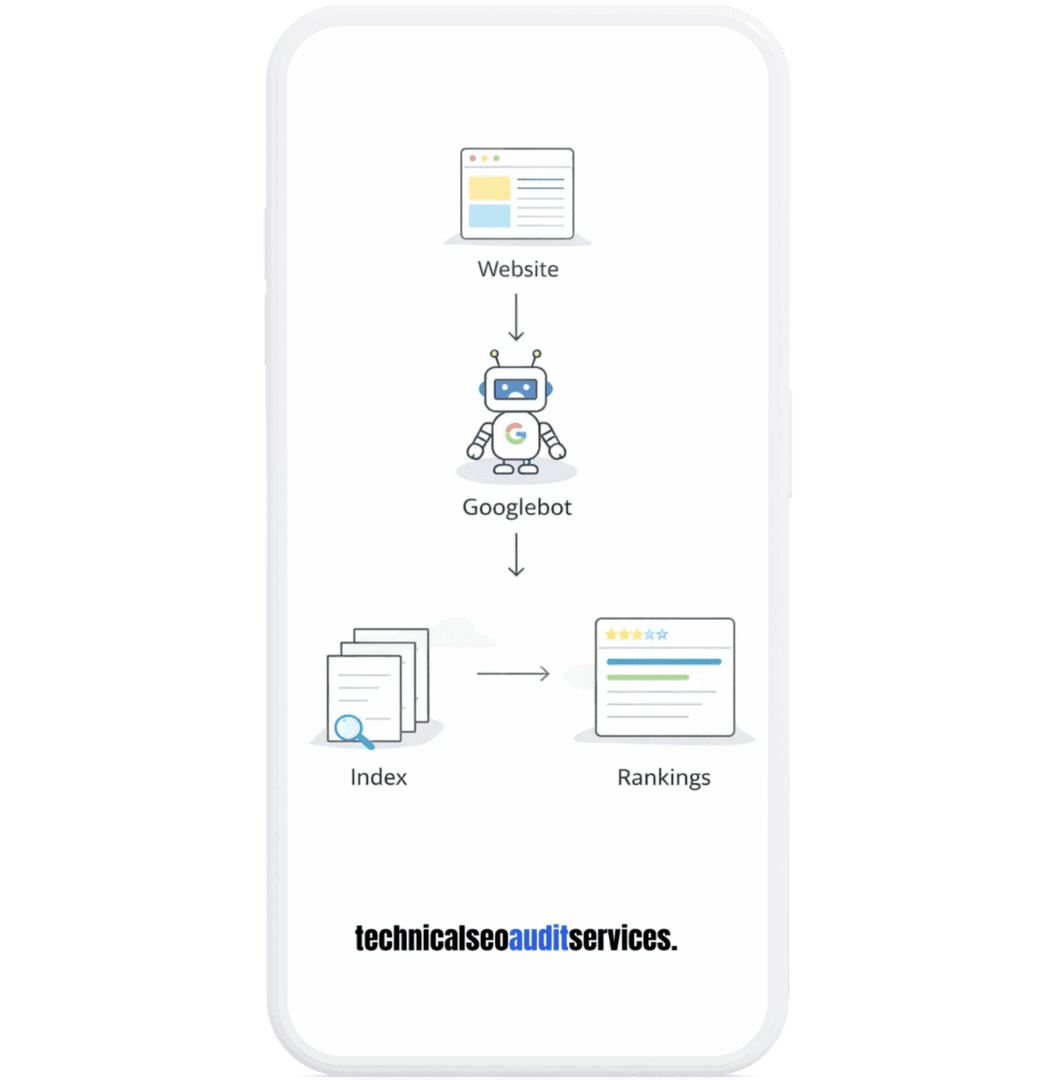
Search engines do not judge websites like humans do. They rely on crawling, indexing, and technical signals. Many websites publish good content but fail technically. That’s why search engines struggle to access pages correctly, and also some of pages never reach the index at all.
Our Technical SEO audit services exist to find these hidden problems.
How the technical SEO audit services works?
The audit follows a clear and structured process.
Each step builds on the previous one, so nothing important gets missed and results stay easy to understand.
Review and data collection
The first step is understanding how your website currently behaves. This includes reviewing crawl data, index signals, performance metrics, and search engine reports. The goal is to see how search engines access and process your site today.
Technical analysis
Next comes a detailed technical review.
This step looks at crawling, indexing, site structure, speed, mobile behavior, and technical signals. Issues are examined in context, not treated as isolated warnings.
Issue prioritization
Not every problem has the same impact.
Issues get sorted based on how strongly they affect search visibility and site performance. This helps separate critical blockers from low-impact fixes.
Clear report and next steps
The final step is turning findings into clear guidance.
You receive a report that explains what is wrong, why it matters, and what to fix first. Next steps are outlined clearly, so implementation does not feel confusing or overwhelming.
Why this process works?
A structured approach removes guesswork. You gain a clear technical picture before making further SEO or development decisions.
Something feels off with your website
but you don’t know why
Your website exists, but search results do not reflect the effort you put in, Traffic feels unstable, Visibility feels inconsistent.
Pages not indexing
Your website publishes new pages, but Google does not index them consistently. Some URLs stay excluded even after submission. Search Console may show statuses like “discovered, not indexed” or *“crawled, not indexed,” without explaining the technical reason behind them. These issues usually relate to crawl paths, internal signals, or indexability conflicts.
Traffic drop after changes
Traffic drops often appear after changes that seem routine.
A redesign, CMS migration, theme update, or plugin installation can quietly change how search engines crawl or render pages. The site still looks fine to users, but technical signals break in the background, leading to sudden visibility loss.
Slow site and Core Web Vitals issues
Website speed creates confusion for many site owners.
Pages may feel usable, yet Core Web Vitals fail, especially on mobile devices. Problems often come from layout shifts, script execution, or loading order issues that are invisible without a technical review. Google confirms these signals affect both rankings and user experience.
GSC errors without clarity
Search Console reports errors, warnings, and performance data, but prioritization remains unclear.
Coverage, experience, and enhancement reports list symptoms, not causes. You see what is wrong, but you do not know what matters most or which issues deserve immediate attention.
Conflicting SEO advice
SEO advice often feels inconsistent. One tool flags hundreds of warnings, while another shows no critical problems. Different consultants give different answers. Without technical context, it becomes difficult to decide which recommendations actually help and which ones can be ignored.
Tools show issues but no direction
SEO tools detect problems, but they do not explain intent or impact.
They report everything equally, without understanding business goals or technical priorities. Google recommends focusing on impact rather than raw issue counts, yet tools cannot make that judgment on their own.
Why this confusion exists
If you run a website, this probably feels familiar.
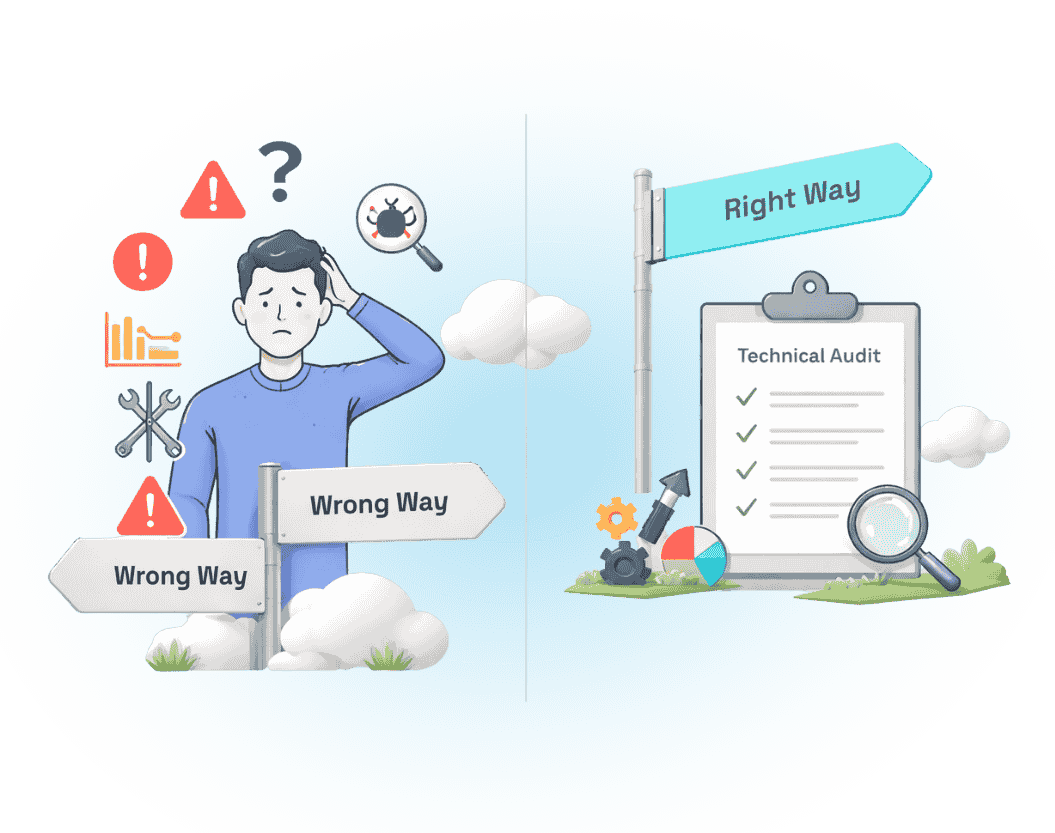
You follow advice, fix issues, and still lack clarity. The problem is rarely your content. It is not knowing how search engines actually access and process your site.
Without technical clarity, fixes turn into guesswork.
You react to warnings instead of making confident decisions.
Our technical SEO audit service removes that uncertainty.
It shows what search engines struggle with and what to fix first.
If you need clear technical direction, this audit is the right place to start.
I need help
Need an audit
What we check in a technical SEO audit.
Our technical SEO audit focuses on how search engines access, understand, and evaluate your website.
It looks beyond surface-level warnings and explains what actually affects crawling, indexing, and performance.
This section breaks down the main areas we review and why each one matters.
Crawlability and indexing
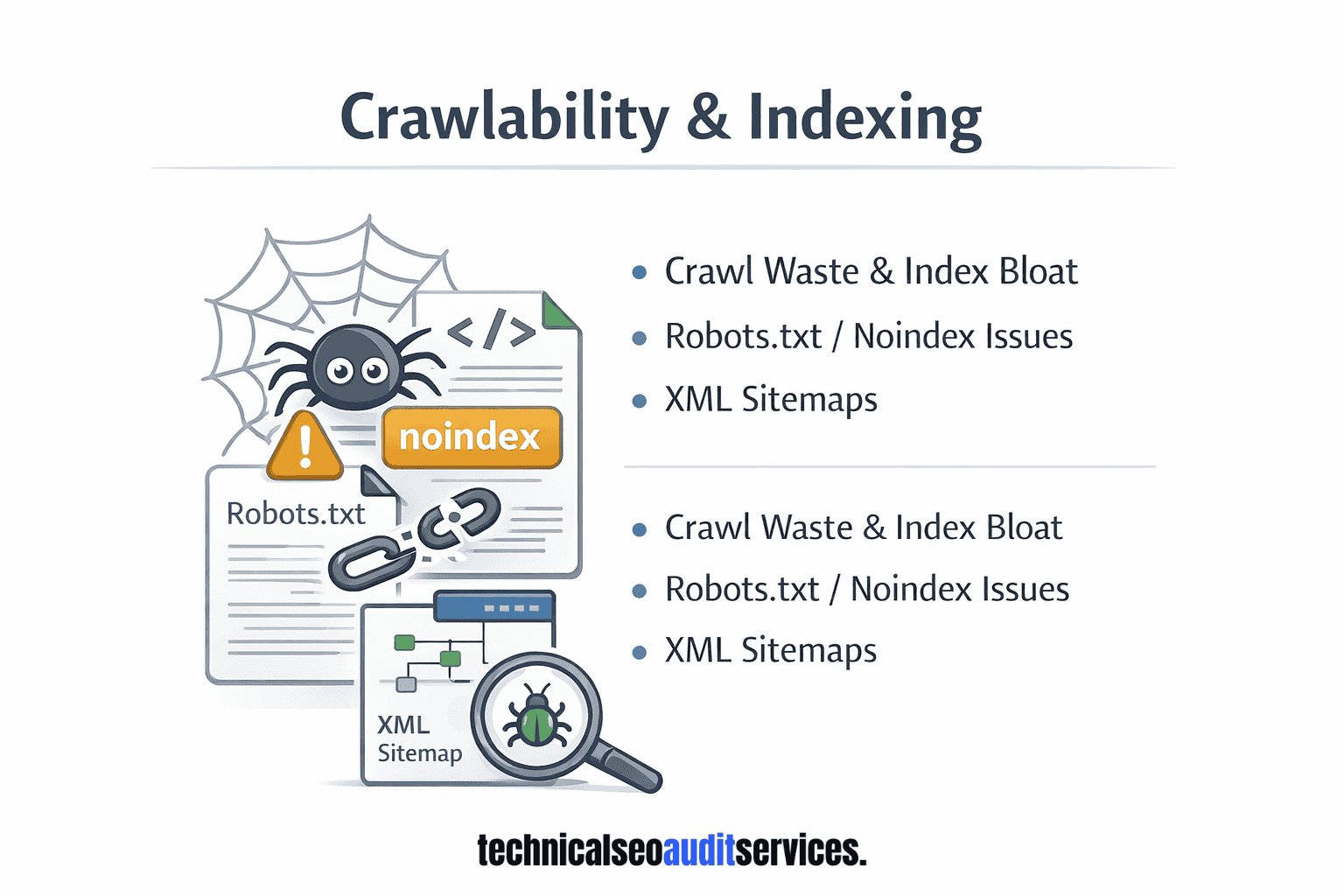
Search engines must crawl your pages before they can index them.
Whether Google-bot wastes crawl budget on low-value URLs while important pages receive little attention. Crawl waste often happens because of poor URL handling, unnecessary parameters, or duplicated paths.
Index bloat creates another layer of problems.
Pages that should never appear in search results sometimes get indexed, while valuable pages stay excluded, and index signals to understand why search engines choose certain pages and ignore others.
Robots rules and noindex directives often conflict with internal linking and canonicals.
These conflicts confuse search engines and block pages unintentionally. XML sitemaps also receive a full review to ensure they support indexing instead of adding noise.
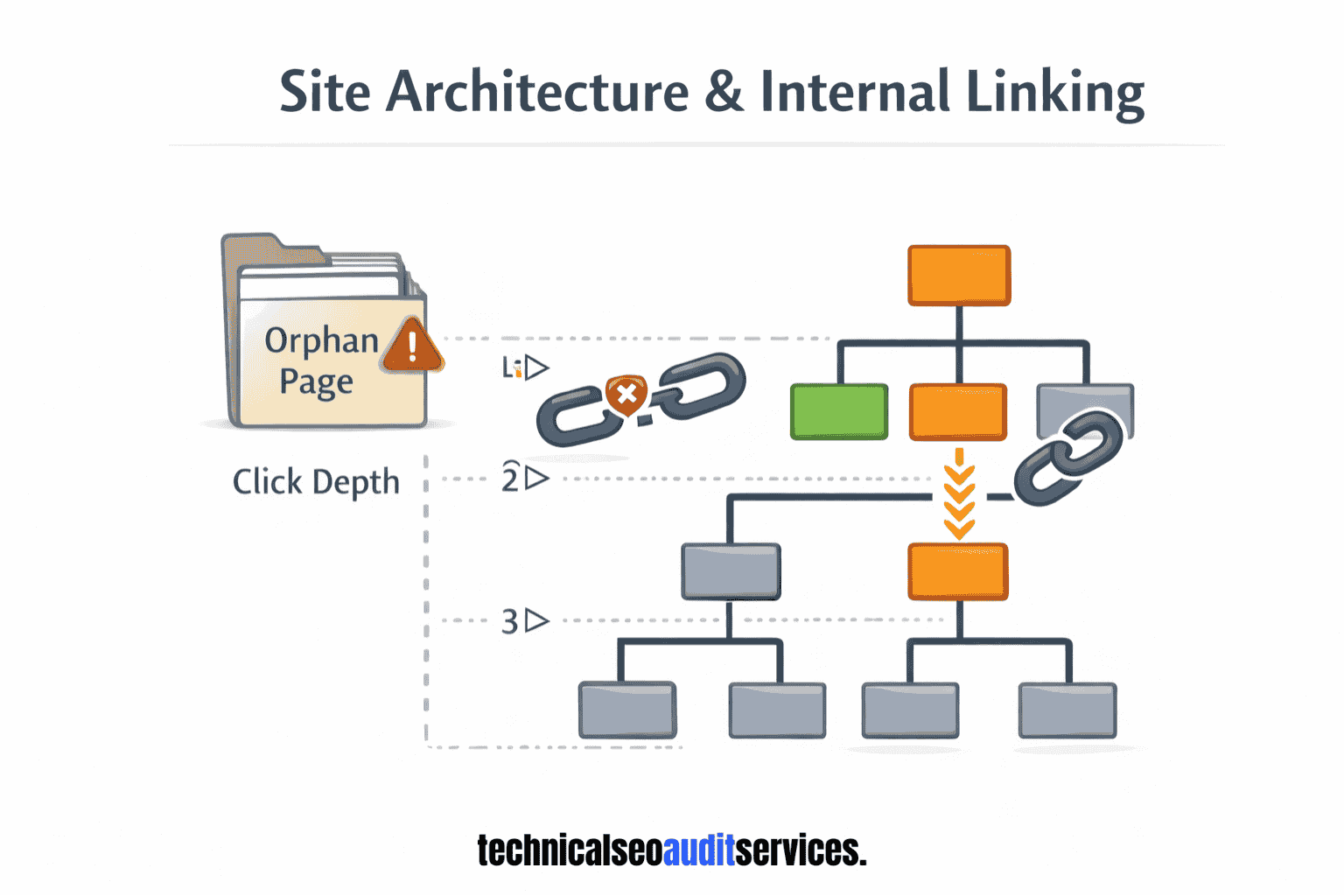
Site Architecture & Internal-linking
Website structure tells search engines what matters most. Poor architecture forces crawlers to travel too deep before reaching key pages. This audit reviews URL structure, folder depth, and logical hierarchy.
Orphan pages weaken overall visibility. Pages without internal links often fail to rank or index consistently. The audit identifies these pages and explains how internal link flow affects discovery and authority distribution.
Internal linking patterns receive close attention. The goal is to help search engines understand relationships between pages and prioritize the right content during crawling and indexing.
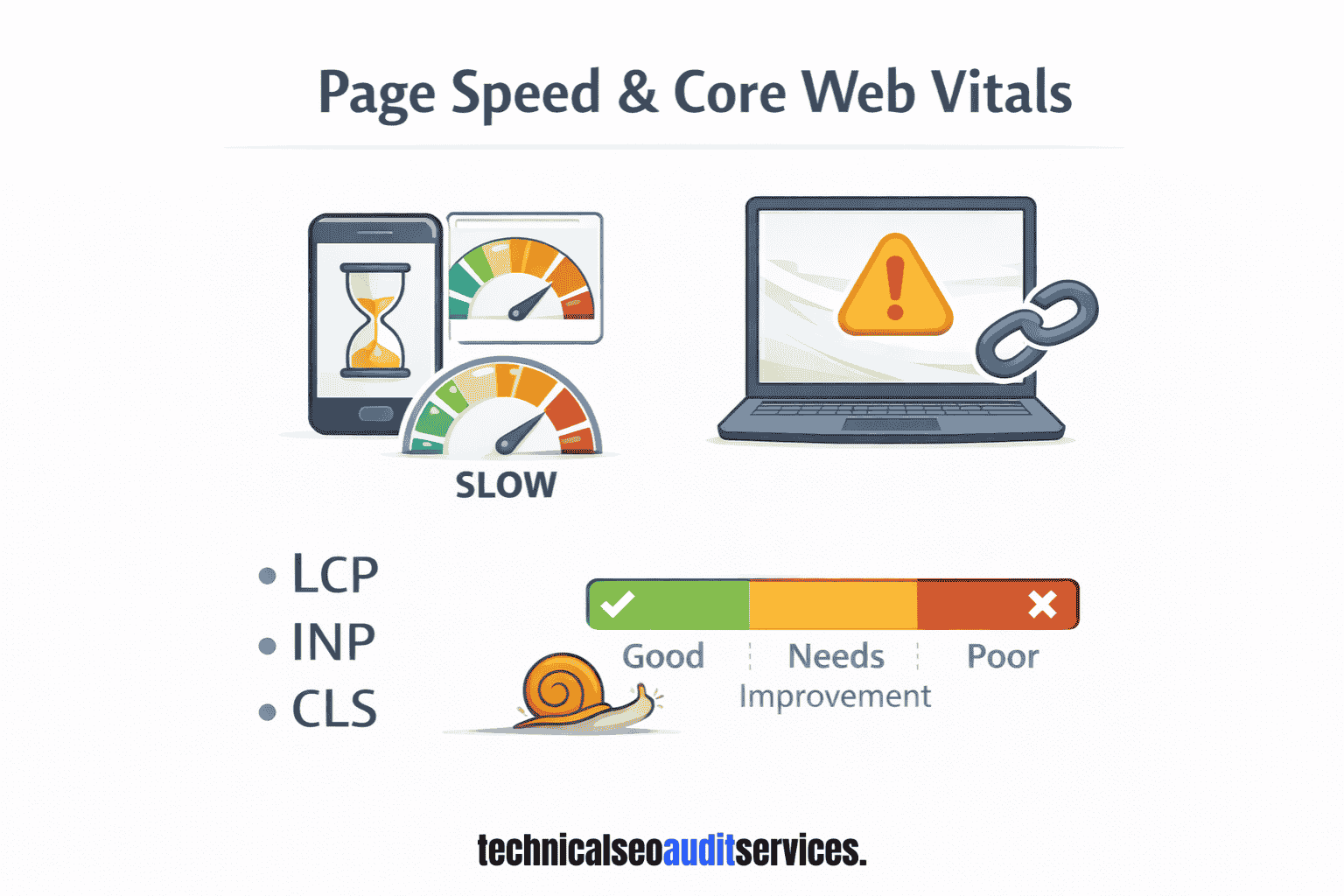
Page speed and Core Web Vitals
Performance affects both search visibility and user experience. This audit reviews Core Web Vitals, including LCP, INP, and CLS, using real performance signals rather than lab scores alone.
Mobile and desktop behavior often differ significantly. Many sites pass desktop metrics but fail on mobile due to scripts, images, or layout shifts. The audit explains where performance breaks and how it impacts real users.
Speed issues rarely come from a single cause. They usually involve loading order, resource handling, or rendering behavior. The audit focuses on what slows pages down and why it matters.
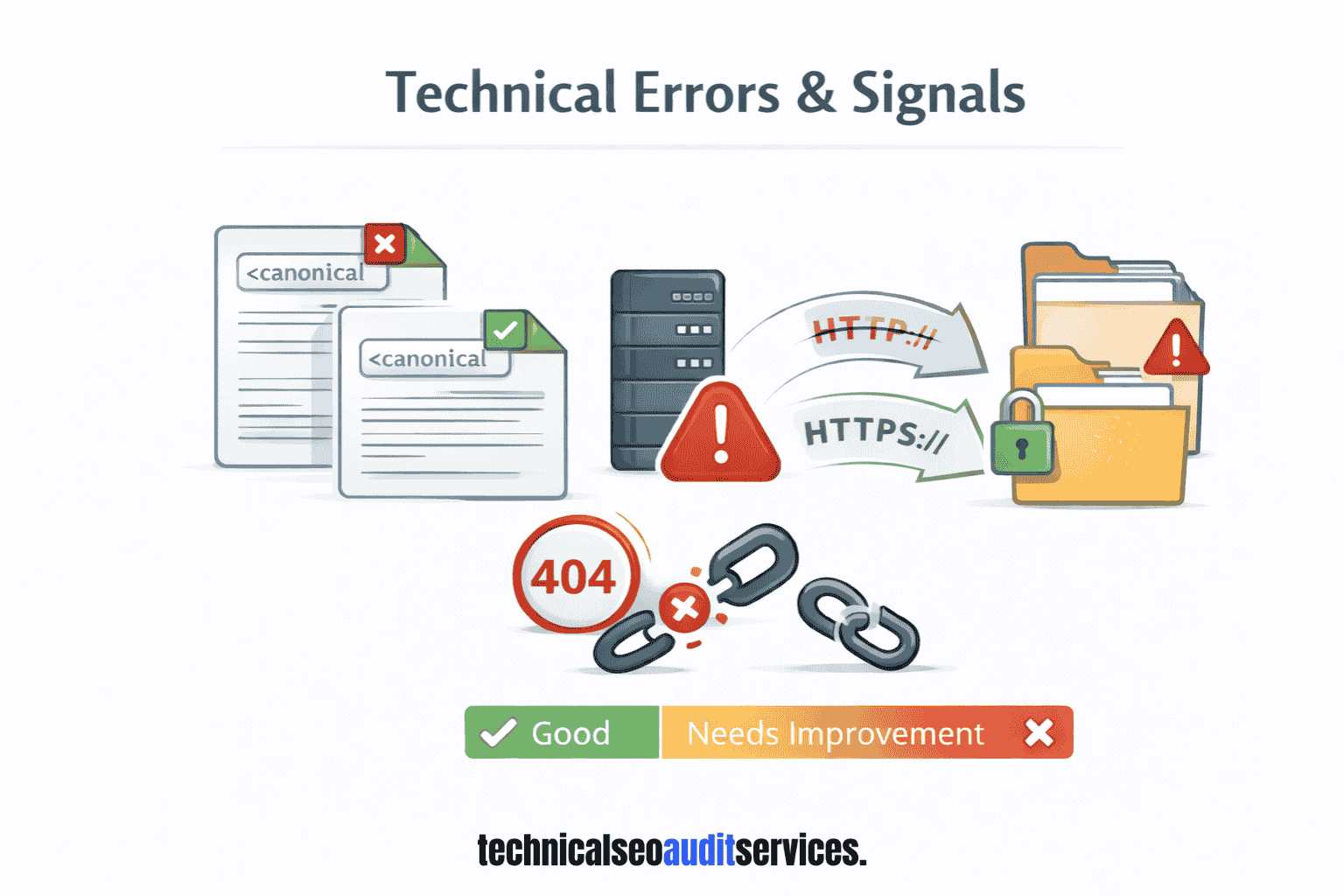
Technical errors and signals
Small technical errors can create large SEO problems. This audit reviews redirects, broken links, and server responses to ensure search engines receive clear signals during crawling.
Canonical handling receives special attention. Incorrect canonicals often cause duplication issues or prevent the right pages from ranking. The audit explains how canonical signals interact with internal links and indexing decisions.
HTTPS consistency and mixed content issues also get reviewed. These signals affect trust, crawling behavior, and browser handling.
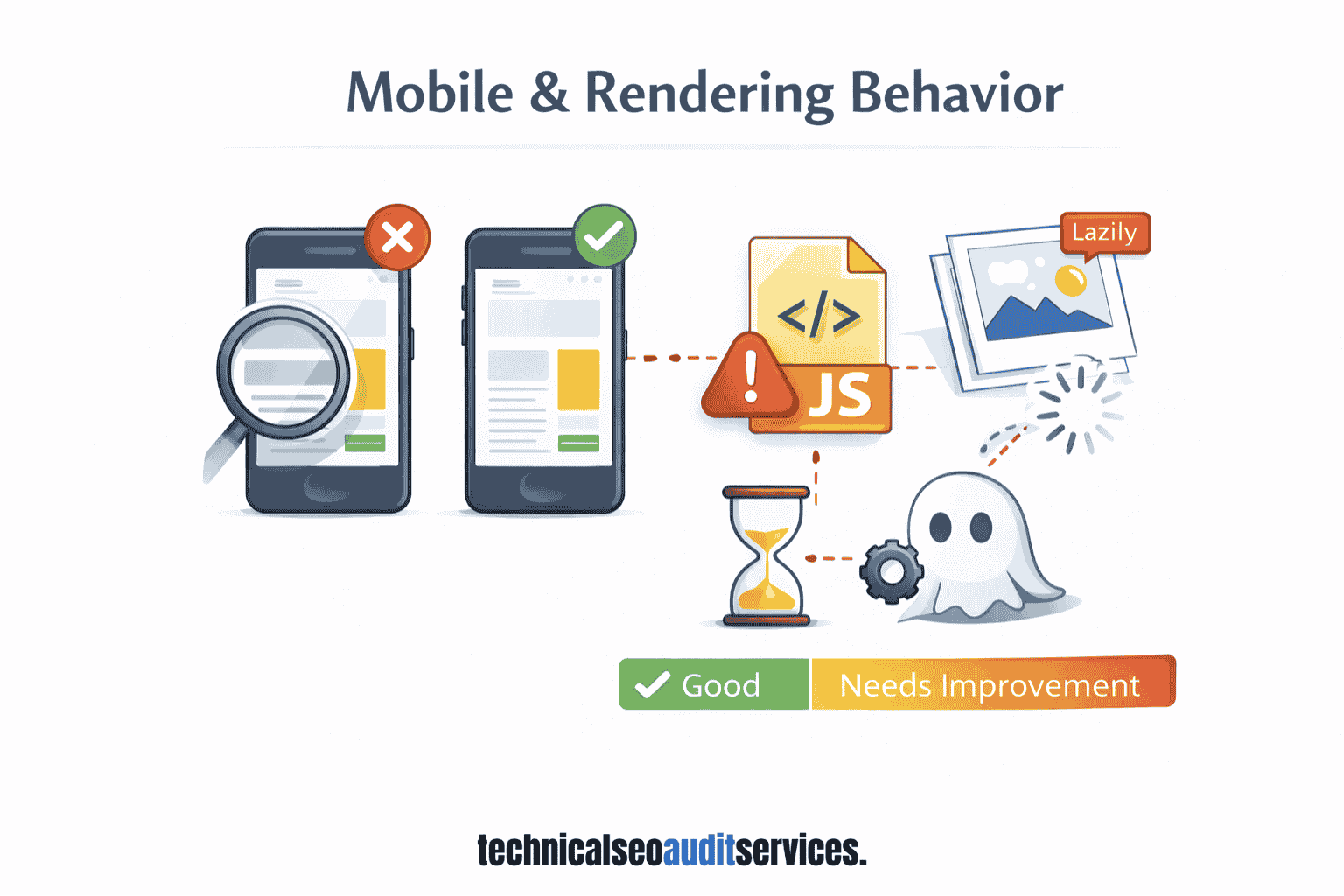
Mobile and rendering behavior
Small technical errors can create large SEO problems. This audit reviews redirects, broken links, and server responses to ensure search engines receive clear signals during crawling.
Canonical handling receives special attention. Incorrect canonicals often cause duplication issues or prevent the right pages from ranking. The audit explains how canonical signals interact with internal links and indexing decisions.
HTTPS consistency and mixed content issues also get reviewed. These signals affect trust, crawling behavior, and browser handling.
Turning technical issues into clear next steps.
Most SEO tools give you long reports. They show many problems but do not explain what really matters.
You still feel unsure about what to fix first.
A proper technical review looks at issues manually
Each problem gets checked in real context, not just flagged by a tool. This helps separate real blockers from low-impact warnings.
Fix instructions also need to be clear
Developers should know exactly what to change. Site owners should understand why the change matters. This avoids confusion during implementation.
Not every issue needs immediate action.
Some problems affect search visibility directly. Others have little impact. Clear priorities save time and prevent wasted effort.
Tools find problems. This explains them.
If you want clear direction instead of another report, this approach helps you move forward with confidence
Who should get a technical SEO audit service?
This type of review works for any website that depends on search traffic. If people need to find your site through Google, technical clarity matters.
Content & blog websites
Content and blog websites often face indexing and crawl issues. Articles get published but do not appear in search results, or older content slowly loses visibility. Technical problems usually sit behind the scenes and block growth without warning.
Local business websites
Local business websites depend on visibility in competitive areas. Even small technical issues can affect how pages appear in local search results. Crawl problems, weak internal links, or mobile issues often limit exposure.
Any site relying on organic traffic
Any website relying on organic traffic benefits from understanding its technical foundation. When search engines cannot crawl, index, or evaluate a site properly, content and links lose their impact.
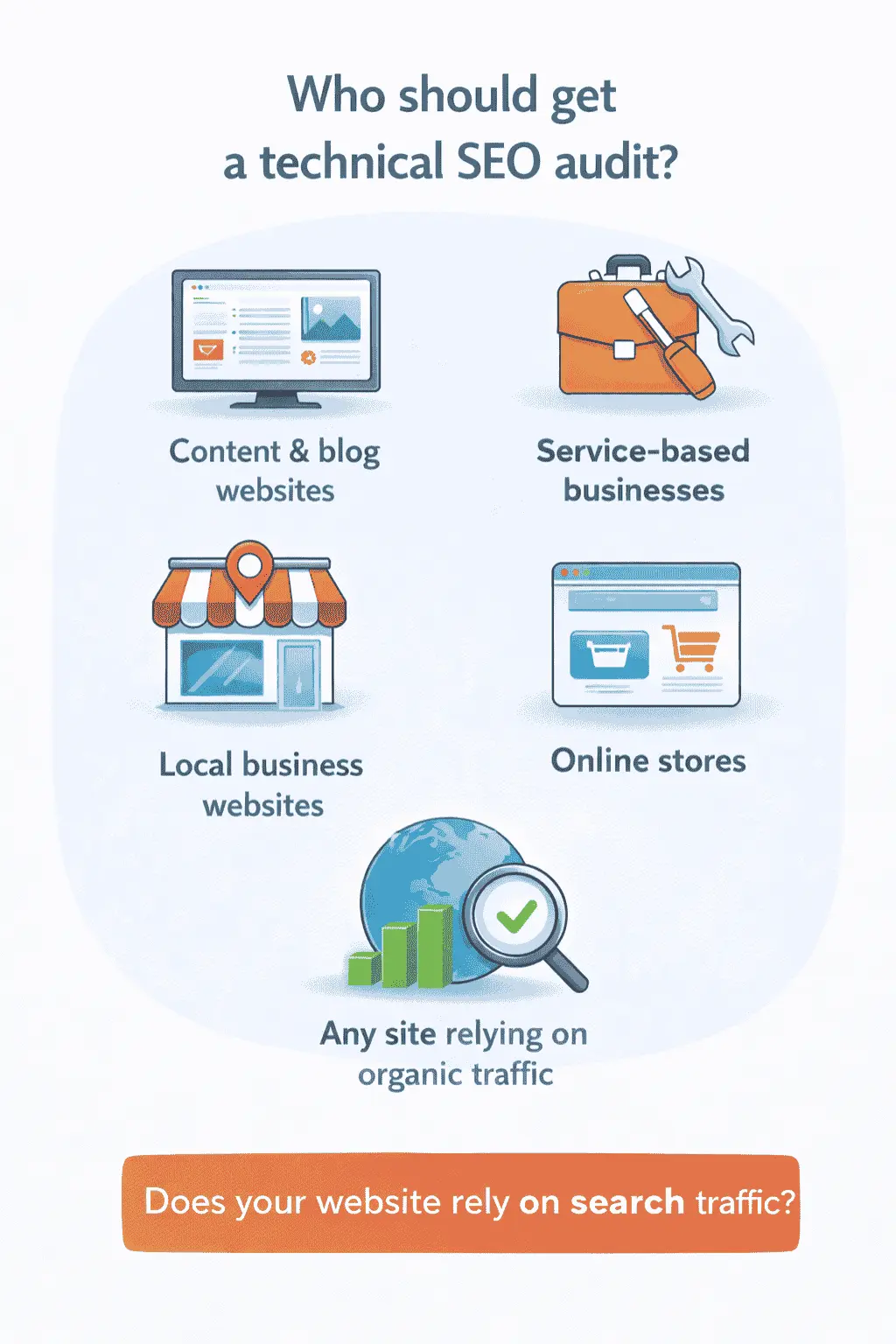
Service-based businesses
Service-based websites rely on clear structure and strong signals. When pages compete with each other or load slowly, search engines struggle to understand which services matter most. This often leads to inconsistent rankings and missed leads.
Online e-Commerce stores
Online stores deal with complex URLs and large page counts. Filters, parameters, and duplicate pages can waste crawl budget and weaken important product pages. Technical clarity helps search engines focus on pages that drive revenue.
And, your’s 😉
If search traffic matters to your website, technical clarity is not optional. A technical SEO audit helps identify what supports growth and what quietly holds it back.
When You Actually Need an Audit?
There are clear signs that point to technical problems.
When these appear, content updates or link building alone rarely fix the issue.
Traffic suddenly dropped
If search traffic drops without a clear reason, technical changes are often involved. This usually happens after updates, migrations, or backend changes that affect crawling or indexing. Even small technical issues can cause large visibility losses.
A Migration or redesign took place
Site migrations and redesigns change URLs, structure, and signals. If redirects, canonicals, or internal links are not handled correctly, search engines lose context. Rankings often drop weeks after the change, not immediately.
SEO progress has stalled
You keep publishing content, but rankings do not improve.
When technical foundations are weak, content and links lose effectiveness. Search engines struggle to process the site correctly, limiting growth.
New pages are not indexing
You publish new pages, but they do not appear in search results. Search Console may show them as crawled or discovered but not indexed. This often signals crawl conflicts, weak internal linking, or indexability issues.
Speed or CWW issues appear
Performance warnings often point to deeper technical problems. Slow loading, layout shifts, or delayed interaction affect both users and search visibility, especially on mobile devices.
Why these signs matter?
These signals usually appear after technical issues build up over time. Ignoring them often leads to further traffic loss or wasted effort.
What you’ll receive?
The audit is not just an analysis.
You receive clear, usable outputs that help you take action without confusion.
Audit report
You get a structured technical audit report.
It covers crawling, indexing, site structure, performance, mobile behavior, and technical signals. The report is easy to read and focused on what matters.
Issue explanations
Each issue comes with a clear explanation.
You see what the problem is, where it appears, and why it affects search visibility. No vague warnings or unclear terminology.
Priority list
Not all issues deserve equal attention.
You receive a priority list that separates critical blockers from lower-impact tasks. This helps you focus on fixes that actually move results.
Fix guide for every role
Recommendations are written so both non-technical users and developers can understand them.
Site owners get clear context. Developers get direct guidance on what to change and where.
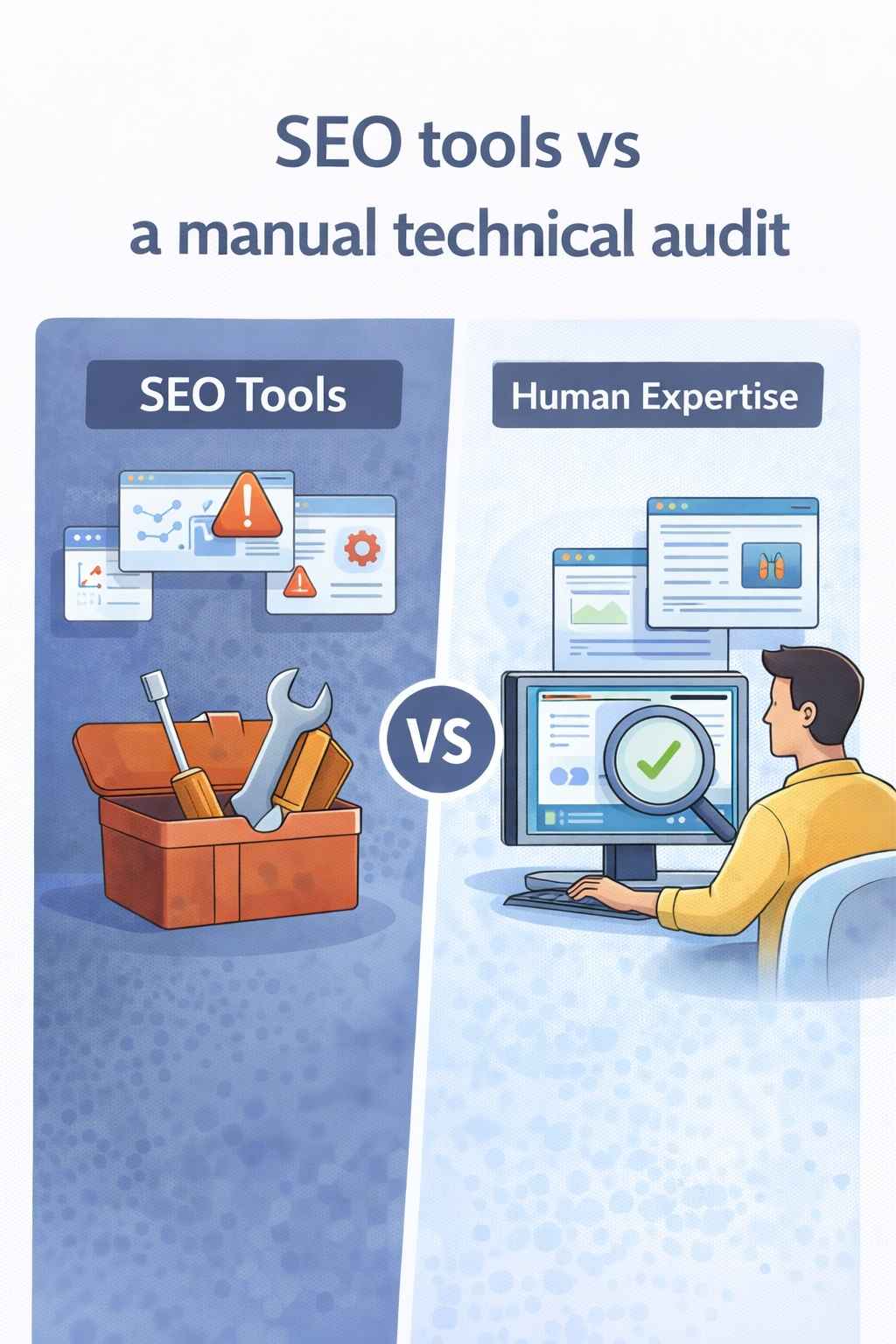
SEO tools vs a manual technical audit
SEO tools play a useful role. They help collect data and surface potential problems. Common tools scan pages, report errors, and show performance metrics. This information is a starting point, not the full picture.
Tools help gather information and human expertise turns that information into clear direction.
And, Why this matters?
Search engines do not rank reports, they evaluate websites and understanding how signals work together makes the difference between guessing and making informed decisions.

Umayr Agha
Technical SEO audit expert

Founder
technicalseoauditservices.com
Why work with me?
I’m Umayr Agha a technical SEO expert focused on audits, site performance, and technical problem solving.
I’ve worked on 300+ websites and completed 50+ technical audits for eCommerce stores, helping fix crawl, indexing, structure, and speed-related issues.
Tools are used to collect data, not to replace analysis. Every issue is reviewed manually to understand its real impact. The focus stays on how search engines interact with your website, not on producing automated reports.
Along with hands-on experience, I hold SEO certifications from iSkills and HubSpot, supporting a structured approach to technical and performance work.
The goal is simple.
Clients choose this approach because it brings clarity, not noise. You get guidance that developers can act on and site owners can understand. This grounded understanding of technical SEO helps you make informed decisions and avoid guesswork.
Common questions about technical SEO audits
Get a clear technical picture of your website
A focused audit helps you understand what search engines struggle with and what needs attention first.
You can start in the way that feels right for you: